It is evolutionary that we, as people, move towards a state where we are all united. Information is now available to mostly everyone, and ideally, we should all be able to have as much access to knowledge as the next person. Eventually we will be able to share a collective thought process. This collective thought process is the beginning of the next step in our life cycle. It is why we find ourselves drawn to spirituality more than ever before.
It is in our nature to believe that each of us has a purpose, to bring something new to this earth while we are alive. That while we are here, we are needed and there are things that only we can provide. In prehistoric times, what we sought to bring to the table was something that would aid our survival. All of our human instincts can be traced back to this time in human history; a time when knowing how to hunt, nurse or create weapons was a matter of life or death not only for ourselves, but our community.
In the modern world, the concept of being unique, although it carries great cultural significance, is not a matter of life or death. Uniqueness without snobbery is a gift. However, when we become snobs we are stopping evolution itself and withholding information in order to use it as a power over others. We are heading towards a period of evolution that relies on knowledge without gatekeepers. A world where everyone has access to all of the information that is put out by individuals is a world that is moving forward.
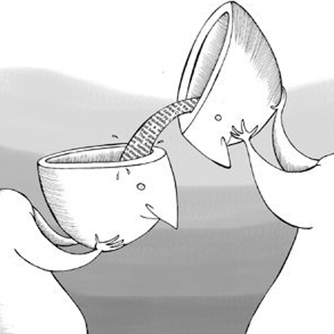
The ironic part is that it is mostly those who preach about unity who become snobs in their quest to be ‘more unique’ than the rest. Ultimately, it is a catch-22 in the evolutionary process. To base your identity entirely on the idea that you are special and unique holds humans back from evolving. It in our nature to want to be needed specifically for what only we can bring to the table. Hence it is also human nature to feel threatened when surrounded by others with similar traits. In prehistoric times, when you were no longer useful to your community, you were lower on the social totem pole, and would be left to starve or fend for yourself. We now carry this need to be unique and be the sole receptacles of information in us, even when it is not a deciding factor in our survival.
The fight to be different than others is fueled by the fear of being useless. Being smarter or more unique is of no use if you ultimately have nothing to offer but bragging rights.
We should all be artists and mechanics. But it is those who solely define themselves as such who wind up carrying antiquated and childlike fears. When a person’s self-worth is based on how unique they are in a world holding millions of others, it is only natural that they easily feel threatened. Being easily threatened is the characteristic that creates gatekeepers of information. While we may all preach that we must do well and help others, it starts with us. Not just in our actions, but in how we think of ourselves. The way we define ourselves is eventually how we treat others. While being unique is a given, revolving our lives around this one trivial factor in who we are as beings is the very thing that stops us from evolving. No amount of politeness or community service can make up for being a wrench in the evolutionary cog. This self-righteous idea of uniqueness is why missionary groups, although they feed the poor in third world countries, end up doing more harm than good to the community. It is a factor behind cultural appropriation and isolation. Life is about teaching others how to fish and not feeling threatened that others will take the fish from you. It is about teaching, rather than withholding or giving ‘just enough’. Withholding, while it may make you more interesting, in turn also makes you useless in our modern society. It all starts with the way we think of ourselves. The way we think of ourselves is what ultimately decides what we do with our lives and how we treat others. We have enough and are unique just for being alive. Stop defining yourself solely on your ability to be different and open the gates.



 quartervida.com